Fabrics
Mesh or clear PVC outdoor blinds: which fabric is right?
Mesh or clear PVC? How the two outdoor blind fabrics compare on view, privacy, heat, rain, wind and lifespan, and which one suits each space.
7 min read

Wind and salt are the two things that shorten an outdoor blind's life fastest. The right system and hardware make the difference between a blind that lasts and one that flaps itself apart.
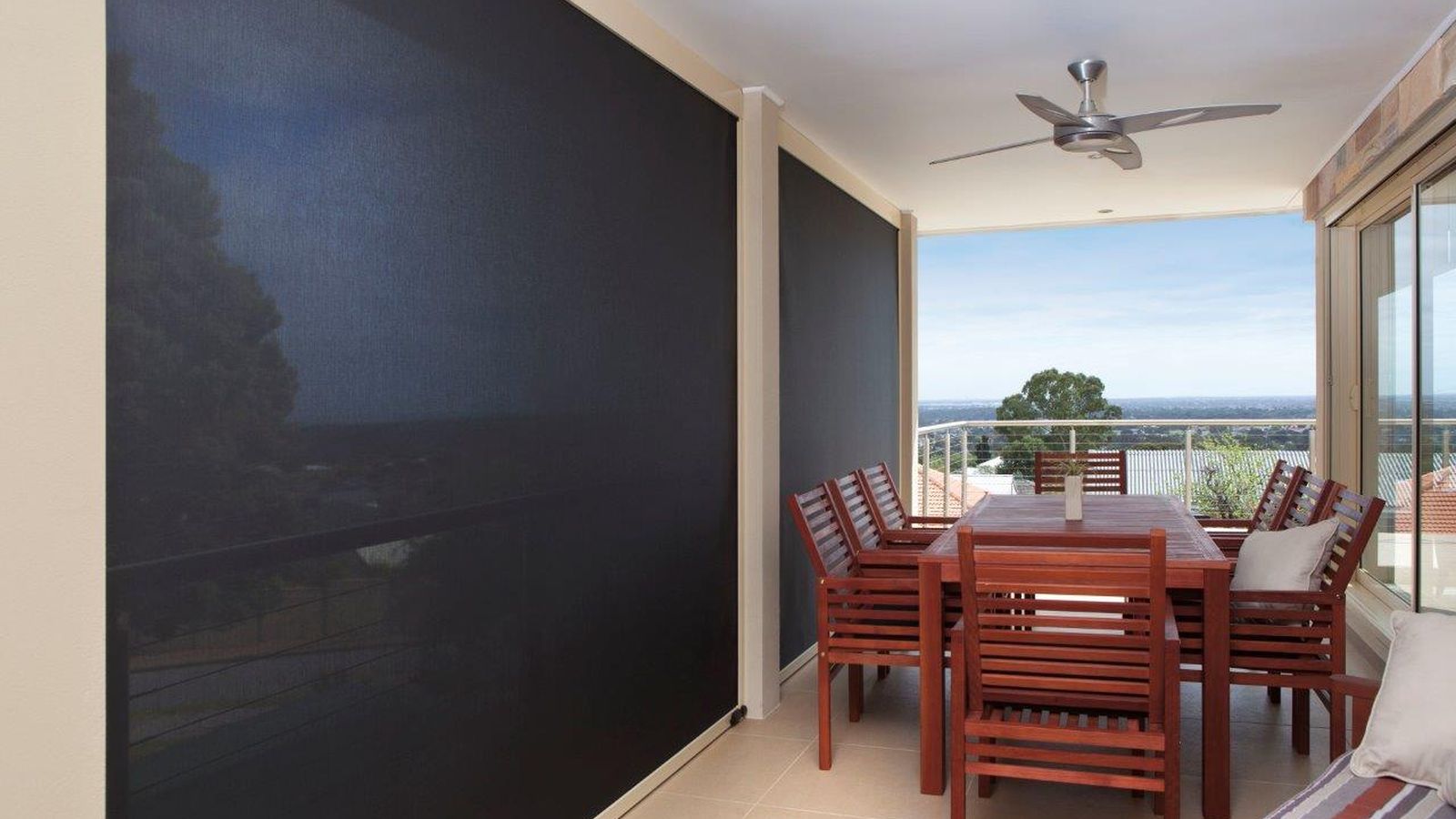
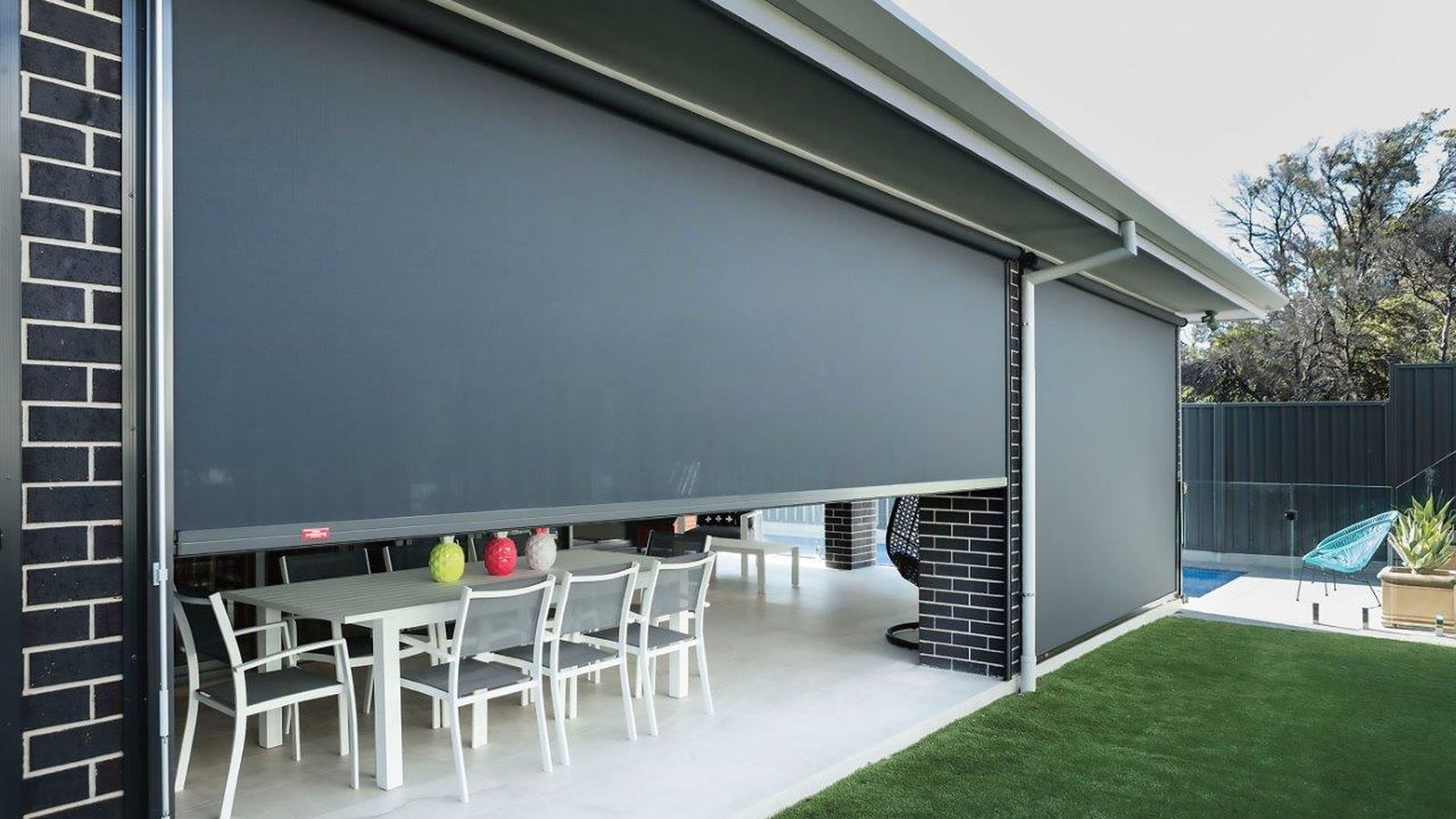
Short answer: on windy or coastal sites, choose a track-guided blind, where the fabric edge is locked into side channels, with powder-coated aluminium and stainless steel fittings. Avoid free-hanging and strap-down blinds on exposed openings, and still roll any blind up in storm-force wind.
Most outdoor blinds that fail early do not wear out. They are worked loose by wind or corroded by salt. Both problems are predictable, and both are mostly solved at the ordering stage.
A blind is a large flat surface. When wind hits it, the fabric wants to belly out, and every gust pulls on the edges and the fixings. On a free-hanging blind that movement is constant: the bottom bar swings, the fabric flogs, and over time hems fray, straps tear and brackets loosen.
The answer is to stop the fabric moving. If both edges are held, the blind can only flex in a shallow curve, and the load is spread along the full height of the tracks instead of concentrated at a few points.
| System | How the edges are held | Wind suitability |
|---|---|---|
| Track-guided (zip or welded-edge) | Fabric edge locked into side channels full height | Best choice for exposed sites |
| Wire-guided / straight drop | Bottom bar runs on tensioned side wires | Moderate; fabric between wires still moves |
| Rope and pulley | Held at the bottom only | Sheltered sites only |
| Café blind with straps | Strapped or buttoned at intervals | Moderate if fully strapped; poor if not |
Track-guided blinds are the clear choice for exposed sites. Their limit is usually set by the width of the blind rather than the system itself: a wider blind catches more wind and lets the fabric belly further. Keeping each blind under about 5 m wide, and splitting wider openings over a centre post, matters even more in wind than it does elsewhere.
Yes. Mesh lets a little air pressure through its weave, so it loads the hardware less than a solid fabric of the same size. Clear PVC blocks wind completely, which is why people want it on the weather side, but it also takes the full force of every gust. On a very exposed opening, a heavier PVC in a track system is the sensible combination.
Salt spray settles on every surface, holds moisture, and attacks metal that is not protected. Within a few kilometres of the coast, and especially on beachfront and bayside homes, standard zinc-plated screws and brackets can show rust within a season or two. Rust then stains the fabric and seizes moving parts.
Don't undo good hardware with cheap screws. Mixing ordinary zinc-plated screws into a stainless installation is one of the most common causes of rust streaks on new blinds near the coast.
Rinse the fabric, tracks and bottom bar with fresh water regularly — monthly is a reasonable habit on the beachfront, less often further inland. A garden hose on a gentle setting is enough; the point is to wash salt off before it builds up. Check the tracks for grit and sand, which wears the fabric edge as the blind runs up and down.
Even the strongest track system is a fabric screen, not a wall. Roll blinds up when strong winds or storms are forecast, and whenever the house will be empty in uncertain weather. A blind left down in a severe gust can bend tracks, pull fixings or tear fabric, and that kind of damage is usually not covered by a warranty.
If you will often be away, a motorised blind with a wind sensor that retracts automatically is worth considering. It removes the guesswork of deciding whether today's forecast is bad enough.
Very. In wind, the tracks are only as strong as what they are screwed into. Fix into solid timber posts, steel or masonry, not into thin fascia boards, lightweight cladding or the edge of a post. If the structure itself flexes in a strong wind, the blind will move with it no matter how good the system is.
Track-guided blinds, where the fabric edge is locked into side channels for the full height. They hold their shape in wind far better than free-hanging or strap-down blinds.
Track-guided blinds handle everyday wind well, but any outdoor blind should be rolled up when storms or very strong winds are forecast, to avoid bent tracks or torn fabric.
Powder-coated aluminium components with marine-grade 316 stainless steel screws, bolts and brackets. Avoid zinc-plated fixings, which rust quickly in salt air.
Around once a month on beachfront or bayside homes, less often further inland. A gentle rinse with fresh water removes salt before it builds up.
Mesh puts less load on the hardware because some air passes through it. Clear PVC blocks wind completely, so on very exposed sites use a heavier PVC in a track-guided system.
Fabrics
Mesh or clear PVC? How the two outdoor blind fabrics compare on view, privacy, heat, rain, wind and lifespan, and which one suits each space.
7 min read
Motorisation
Motorised or manual outdoor blinds? What a motor costs, wired vs battery and solar options, when you need an electrician, and when it pays off.
7 min read
Care
How to clean mesh and clear PVC outdoor blinds, what products to avoid, how to deal with mould, and the simple care that keeps tracks running.
6 min read
Every outdoor blind, awning and roller shutter we make, with fabric and colour options, on the main DIY Blinds store.
View all products