Fabrics
Mesh or clear PVC outdoor blinds: which fabric is right?
Mesh or clear PVC? How the two outdoor blind fabrics compare on view, privacy, heat, rain, wind and lifespan, and which one suits each space.
7 min read

Shading a window from the outside is one of the simplest ways to keep a house cooler in an Australian summer. Here is why it works, and how to get the most from it.
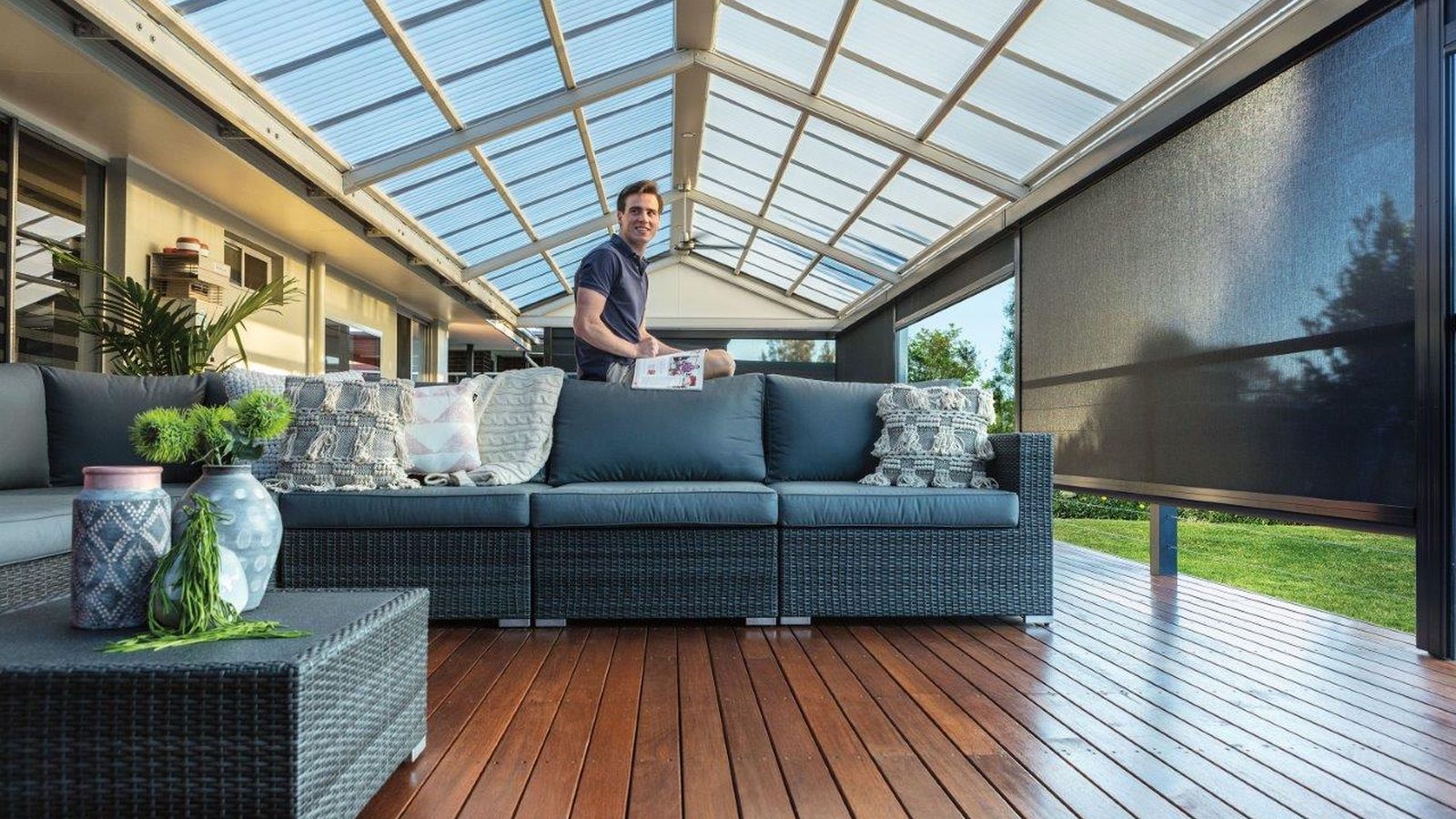
Short answer: yes. Outdoor blinds stop the sun before it reaches the glass, so much less heat enters the house than with internal blinds or curtains. Mesh fabrics with a low openness factor work best, and shading west- and north-facing windows makes the biggest difference.
Windows are one of the main ways heat gets into a home in summer. Sunlight passes through the glass, warms the floor, furniture and air inside, and that heat is then stuck there. Outdoor blinds deal with the problem at the source.
An internal blind or curtain does block the sun, but only after the sunlight has already passed through the glass. The blind itself heats up, and that heat is now inside the room. External shading intercepts the sun outside the window, so most of the heat stays outside.
This is a well-established principle in Australian energy-efficient home design, and it is why external shading is consistently recommended over internal coverings for reducing summer heat gain. The exact difference depends on the glass, the orientation and the fabric, but external shading is reliably the more effective of the two.
| Orientation | Summer sun | Best shading approach |
|---|---|---|
| West | Low, intense afternoon sun — usually the hottest | Adjustable outdoor blinds; eaves alone rarely help |
| East | Low morning sun | Outdoor blinds, used in the morning |
| North | High midday sun | Eaves or pergola, plus blinds on hot days |
| South | Little direct sun | Usually no heat shading needed |
Directions apply to the southern hemisphere. West-facing glass is the usual problem: the afternoon sun comes in low, under eaves and verandahs, and hits at the hottest time of day. That is exactly where a vertical outdoor blind works best, because it covers the glass from top to bottom.
For heat control, mesh is the fabric to use. It blocks most of the direct sun while letting trapped hot air escape through the weave. Clear PVC does very little for heat, and on an enclosed area in direct sun it can make things warmer by trapping heat behind it.
Within mesh, two choices matter:
A practical balance: on a hot west wall where heat is the main problem, choose a low-openness mesh and consider a lighter colour. Where the view matters more, charcoal 5% mesh still provides strong shading.
They can help. Keeping sun off the glass reduces how much heat the air conditioner has to remove, which can mean it runs less often or at a lower setting. How much you save depends on your house, climate, glazing and how you use the blinds, so be cautious of any fixed savings figure. What is reliable is the direction: less heat in means less cooling needed.
The other benefit is comfort. Shaded rooms feel noticeably cooler, furnishings and floors fade less, and an outdoor area that was unusable on summer afternoons becomes somewhere you can sit.
In a different way. In winter you generally want the sun to reach north-facing windows, so raise mesh blinds on sunny days to let the warmth in. On a covered outdoor area, clear PVC blinds block cold wind and hold some warmth in, which is why many homes pair mesh for summer with PVC on the side that takes the winter weather.
Yes. By shading windows from the outside, they stop much of the sun's heat before it passes through the glass, which keeps rooms cooler than internal blinds can.
Yes. Internal blinds block sun only after it has passed through the glass, so the heat is already inside. External blinds keep most of that heat outside.
Lighter colours reflect more of the sun's energy, while darker colours give a clearer view out. On a very hot west wall, a lighter, low-openness mesh gives the most heat control.
Very little. Clear PVC lets the sun's heat through and can trap it behind the blind. For heat control, use mesh instead.
West-facing windows, which take low, intense afternoon sun at the hottest time of day. East-facing windows are next, for the morning sun.
Fabrics
Mesh or clear PVC? How the two outdoor blind fabrics compare on view, privacy, heat, rain, wind and lifespan, and which one suits each space.
7 min read
Conditions
Which outdoor blinds stand up to strong wind and salt air, what to look for in hardware and fabric, and when any blind should be rolled up.
7 min read
Motorisation
Motorised or manual outdoor blinds? What a motor costs, wired vs battery and solar options, when you need an electrician, and when it pays off.
7 min read
Every outdoor blind, awning and roller shutter we make, with fabric and colour options, on the main DIY Blinds store.
View all products