Fabrics
Mesh or clear PVC outdoor blinds: which fabric is right?
Mesh or clear PVC? How the two outdoor blind fabrics compare on view, privacy, heat, rain, wind and lifespan, and which one suits each space.
7 min read

Outdoor blinds live in dust, pollen, salt and rain. A few minutes of the right care a few times a year keeps them clear, smooth-running and looking new for much longer.
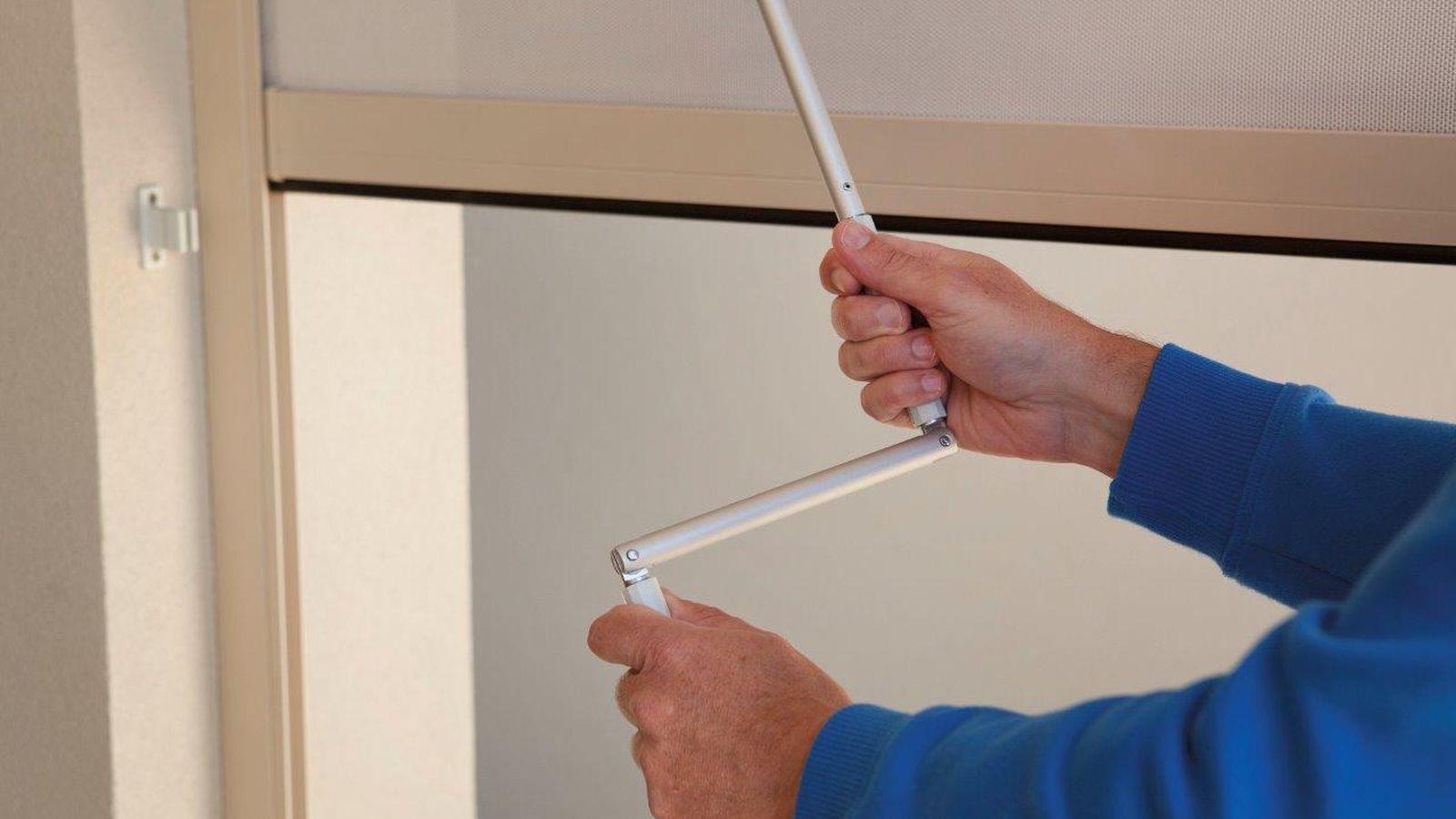
Short answer: lower the blind fully, rinse it with a hose on a gentle setting, wash with lukewarm water and mild soap using a soft cloth or brush, rinse again, and let it dry completely before rolling it up. Never use solvents, abrasive cleaners, bleach or a pressure washer.
Most damage to outdoor blinds during cleaning comes from using too much force or the wrong product. Gentle is enough, because the goal is to remove dirt before it bonds to the surface, not to scrub it off once it has.
As a guide, a full wash every three to six months, and a quick rinse in between if the blind is dusty, near a busy road or by the sea. Coastal homes benefit from a fresh-water rinse about once a month to clear salt. Clean more often if you see mould, bird droppings or sap — these damage fabric if left to sit.
Clear PVC scratches easily and clouds if treated harshly, so it needs a lighter touch than mesh.
| Avoid | Why |
|---|---|
| Pressure washers | Can force water through seams, distort fabric and strip coatings |
| Bleach and chlorine | Weakens fibres, fades colour and attacks PVC coatings |
| Solvents, turps, acetone | Dissolve or damage PVC and coated mesh |
| Ammonia or alcohol glass cleaners | Cloud and dry out clear PVC |
| Scourers and stiff brushes | Scratch PVC and fray mesh |
| Hot water | Can soften or distort PVC |
Mould grows when a blind is rolled up damp or sits in a shaded, humid spot. Treat it early, before it stains.
The best mould prevention is simple: never roll a blind up wet. If it rains while the blind is down, leave it down until it has dried.
On a track-guided blind, the side channels collect dust, leaves, insects and sand. That debris wears the fabric edge and makes the blind stiff to run.
Blinds that stay rolled up for long periods should be clean and dry before they go up, because dirt and moisture trapped in the roll are what cause stains and mould. Lower them every few weeks to air out if you can. Café blinds strapped up for the season should be rolled loosely, never folded, so the PVC does not crease.
No. A pressure washer can force water through seams, distort the fabric and strip protective coatings. Use a garden hose on a gentle setting instead.
Lukewarm water with a few drops of mild soap, such as dishwashing liquid, applied with a soft brush for mesh or a microfibre cloth for clear PVC.
Brush off what you can when dry, wash with mild soapy water or a diluted white vinegar solution, rinse well, and leave the blind down to dry fully in sun and air.
Rinse before wiping, clean only with mild soap and a microfibre cloth, avoid ammonia or alcohol cleaners, and never roll the PVC up dirty or wet.
A full wash every three to six months, with a fresh-water rinse about monthly on coastal homes and whenever mould, sap or bird droppings appear.
Fabrics
Mesh or clear PVC? How the two outdoor blind fabrics compare on view, privacy, heat, rain, wind and lifespan, and which one suits each space.
7 min read
Conditions
Which outdoor blinds stand up to strong wind and salt air, what to look for in hardware and fabric, and when any blind should be rolled up.
7 min read
Motorisation
Motorised or manual outdoor blinds? What a motor costs, wired vs battery and solar options, when you need an electrician, and when it pays off.
7 min read
Every outdoor blind, awning and roller shutter we make, with fabric and colour options, on the main DIY Blinds store.
View all products