Conditions
The best outdoor blinds for windy and coastal areas
Which outdoor blinds stand up to strong wind and salt air, what to look for in hardware and fabric, and when any blind should be rolled up.
7 min read

The track or system you choose decides how a blind moves. The fabric decides what it actually does. Here is how to pick between the two fabrics that cover almost every outdoor blind in Australia.
Short answer: choose mesh if your main problem is sun, glare and heat, and you want airflow and daytime privacy. Choose clear PVC if your main problem is wind, rain and cold, and you want to keep the view. Many homes use both: mesh on the sunny side, PVC on the side the weather comes from.
Mesh and PVC are not better and worse versions of the same thing. They solve different problems, and picking the wrong one is the most common reason people end up unhappy with blinds that were otherwise made and fitted perfectly.
Mesh is a woven fabric, usually PVC-coated polyester, with a measurable percentage of open area. That figure is called the openness factor. A 5% mesh has small gaps making up about 5% of its surface; a 10% mesh has larger ones. The weave lets air and some light through while blocking most direct sun.
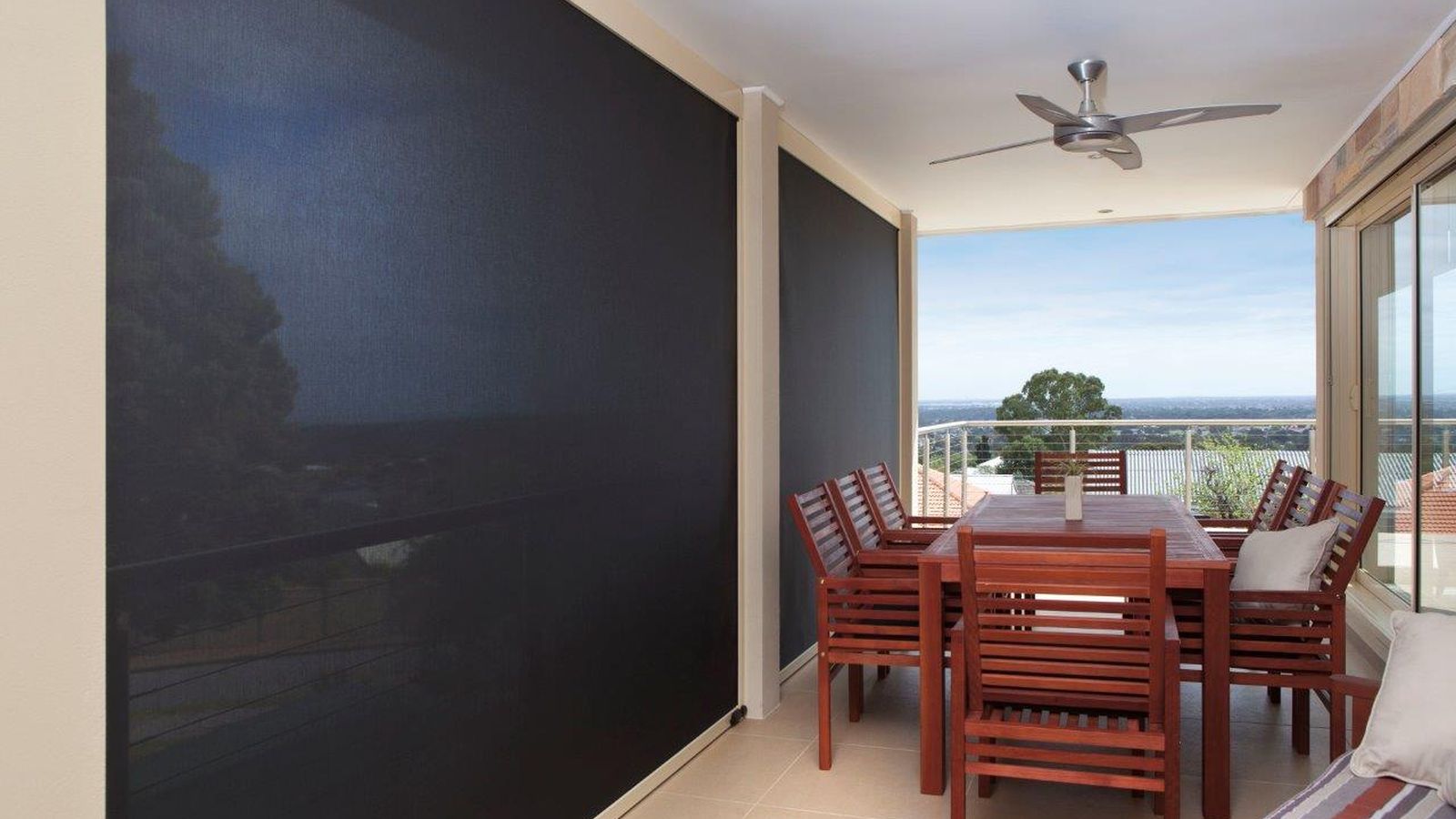
Mesh blinds keep a space shaded and noticeably cooler without sealing it up. From outside, during the day, they give good privacy, because the bright side of the fabric is facing out. At night, with lights on inside, that flips and people can see in.
Clear PVC is a solid, transparent sheet, usually 0.75 to 1 mm thick, often with a heavier reinforced border. It lets no air or water through, which is exactly why people choose it: it turns a verandah into an enclosed room in winter while you still see the garden. Tinted versions take some edge off glare.
The trade-off is heat. Clear PVC lets the sun's heat through and traps it, so a west-facing area enclosed in PVC can get uncomfortably hot on a summer afternoon. It also offers no privacy.
| Mesh | Clear PVC | |
|---|---|---|
| View out | Softened, like looking through a fly screen | Clear, close to glass |
| Daytime privacy | Good | None |
| Sun and glare | Blocks most of it | Little effect (tinted helps slightly) |
| Heat in summer | Keeps the space cooler | Can trap heat |
| Rain | Stops most light rain; heavy driven rain mists through | Fully waterproof |
| Wind | Lets some pressure through, so it loads the hardware less | Blocks wind completely, so it catches more load |
| Cold | Cuts wind chill a little | Holds warmth in well |
| Lifespan | Generally longer; holds up well to UV | Shorter; clouds and stiffens with UV over time |
If you go with mesh, the openness factor is the next decision. Lower numbers block more sun and give more privacy; higher numbers keep more view and let more breeze through.
More than most people expect. With mesh, darker colours give a clearer view out, because they reflect less light into your eyes — the same reason fly screens are black. Lighter colours reflect more of the sun's heat away and look brighter from the street, but you see the weave more from inside.
Charcoal and black are the most common choices for that reason. If keeping heat off a wall or window is the main goal, a lighter colour can be worth the slightly busier view.
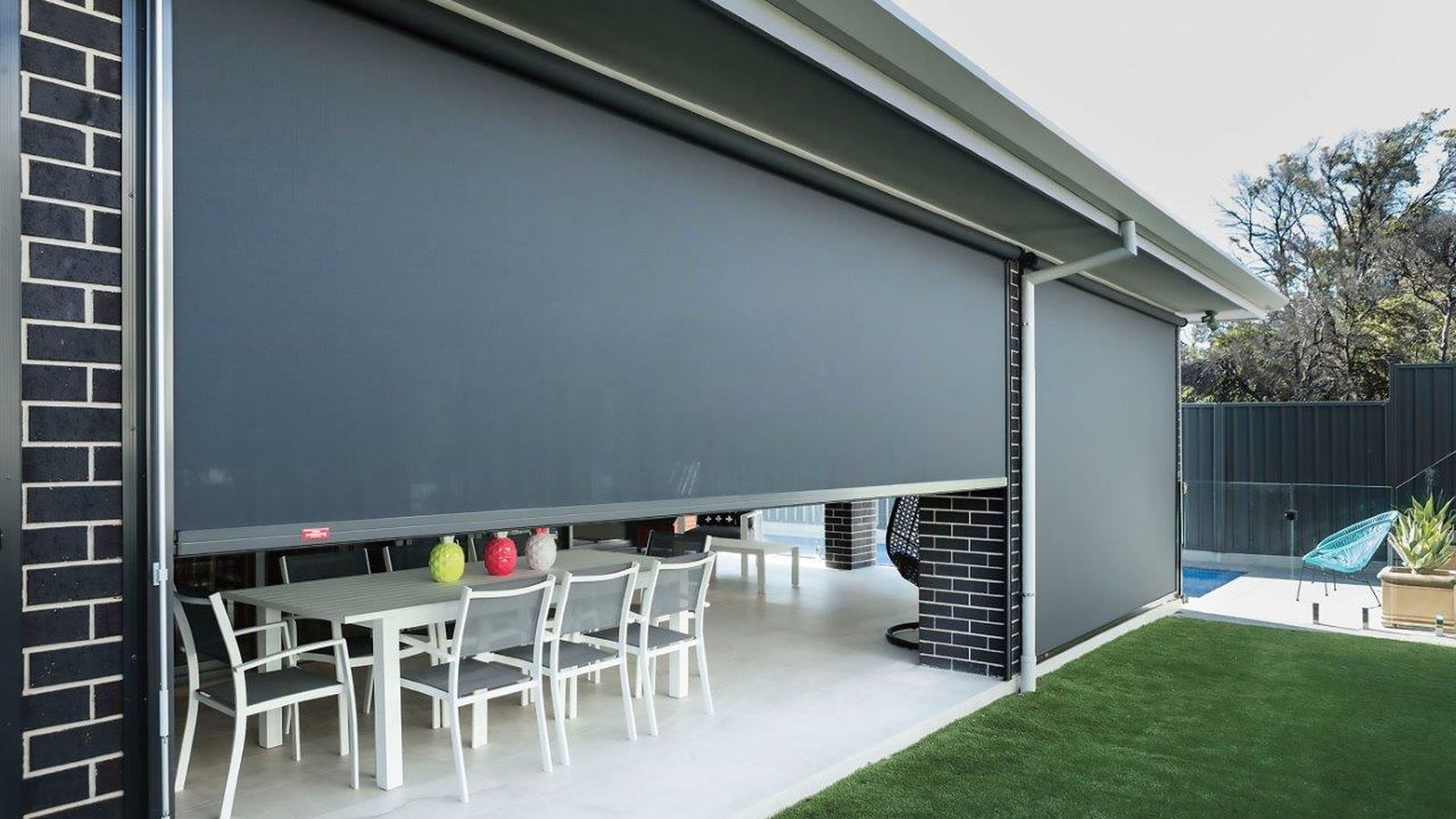
On a three-sided alfresco, it is common to split fabrics by direction. The side facing the afternoon sun gets mesh, so it stays cool and private. The side facing the prevailing winter wind gets clear PVC, so it blocks the weather and keeps the view. The fabrics look different, but if the headboxes and tracks match, the enclosure still reads as one job.
A useful test: think about the day you are least able to use the space now. If it is a 38-degree afternoon, you need mesh. If it is a windy, wet July evening, you need PVC.
Lifespan depends heavily on exposure, so treat any figure with caution. Quality mesh in Australian conditions commonly lasts many years before it fades enough to bother you. Clear PVC usually shows its age sooner: it slowly yellows, clouds and becomes less flexible, especially on north- and west-facing openings. Rolling it up while it is dirty, or folding it, speeds that up.
Whichever you choose, buy the better grade. Fabric is the part of a blind that wears out first, and a heavier mesh or a thicker, UV-stabilised PVC is usually the cheaper decision across the life of the blind.
Neither is better overall. Mesh is better for sun, heat and daytime privacy; clear PVC is better for wind, rain and cold while keeping the view.
Yes, from inside during the day you get a softened view, much like a fly screen. Darker colours and higher openness factors give the clearest view out.
They stop most light rain, but heavy wind-driven rain will mist through the weave. If keeping an area completely dry matters, use clear PVC on the exposed side.
5% is the most popular all-rounder. Go to 1–3% for maximum shade and privacy, or 10% for more view and airflow in a sheltered spot.
Over time, yes. UV exposure gradually yellows and clouds clear PVC. A UV-stabilised grade, regular cleaning and never rolling it up dirty or wet slow the process down.
Conditions
Which outdoor blinds stand up to strong wind and salt air, what to look for in hardware and fabric, and when any blind should be rolled up.
7 min read
Motorisation
Motorised or manual outdoor blinds? What a motor costs, wired vs battery and solar options, when you need an electrician, and when it pays off.
7 min read
Care
How to clean mesh and clear PVC outdoor blinds, what products to avoid, how to deal with mould, and the simple care that keeps tracks running.
6 min read
Every outdoor blind, awning and roller shutter we make, with fabric and colour options, on the main DIY Blinds store.
View all products